New City Centre Along Radnička Street
Novi Sad, Serbia | 2009 | International Competition | 2nd Prize
In 2009, MSK Architects—then operating as Shon Architects / ArkTOON Architects—were awarded 2nd prize in the international competition to design a new city centre along Radnička Street in Novi Sad. The competition called for a transformative urban intervention that would redefine one of the city’s most important corridors through the consolidation of administrative and judicial institutions.
Urban Concept
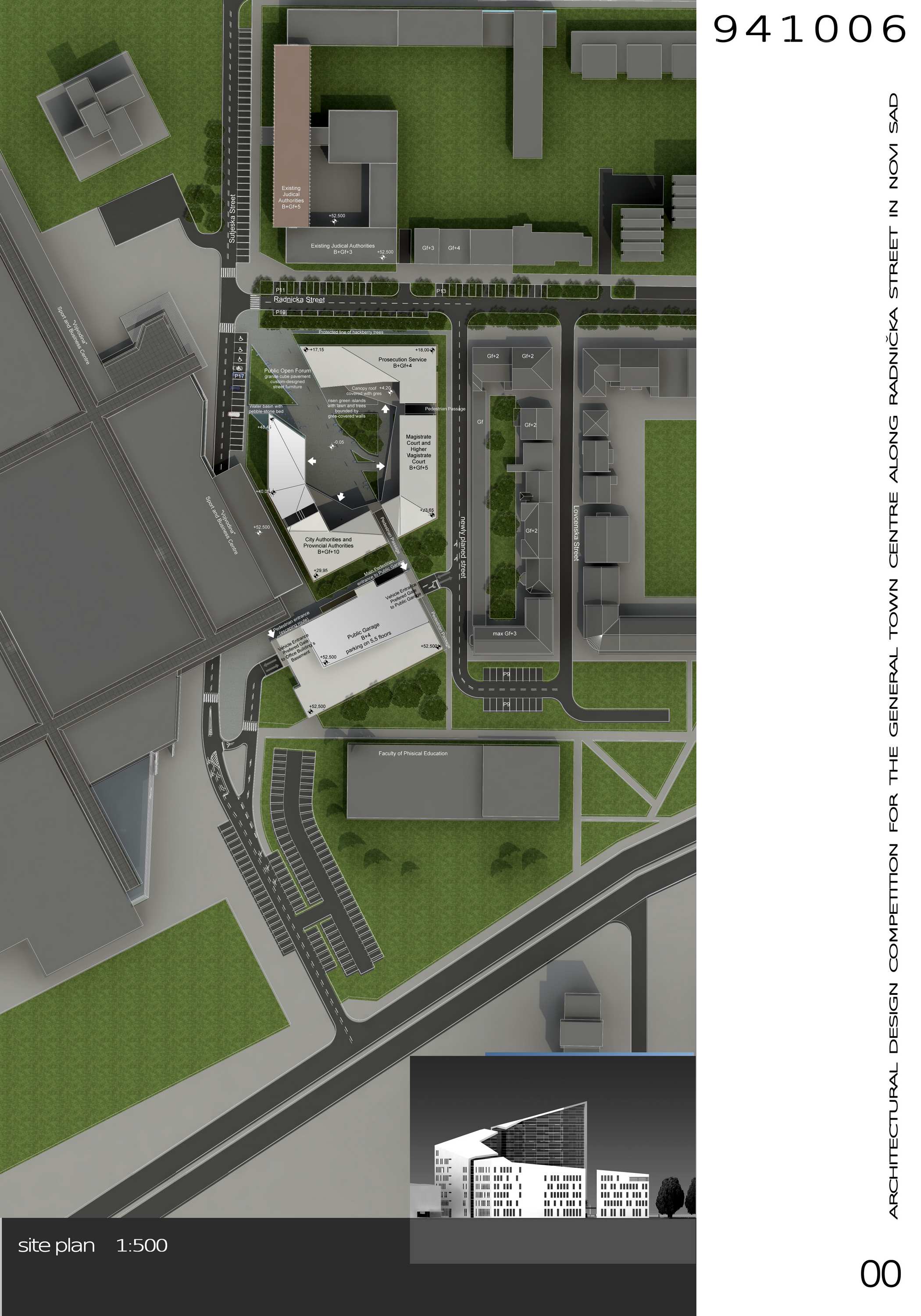
The proposal reimagines Radnička Street as a civic spine, structured by a sequence of contemporary public buildings that together form a new institutional district. Rather than creating a single monolithic block, the project articulates the program into distinct yet interconnected volumes. This strategy establishes permeability, visual dynamism, and a strong relationship between built form and open space.
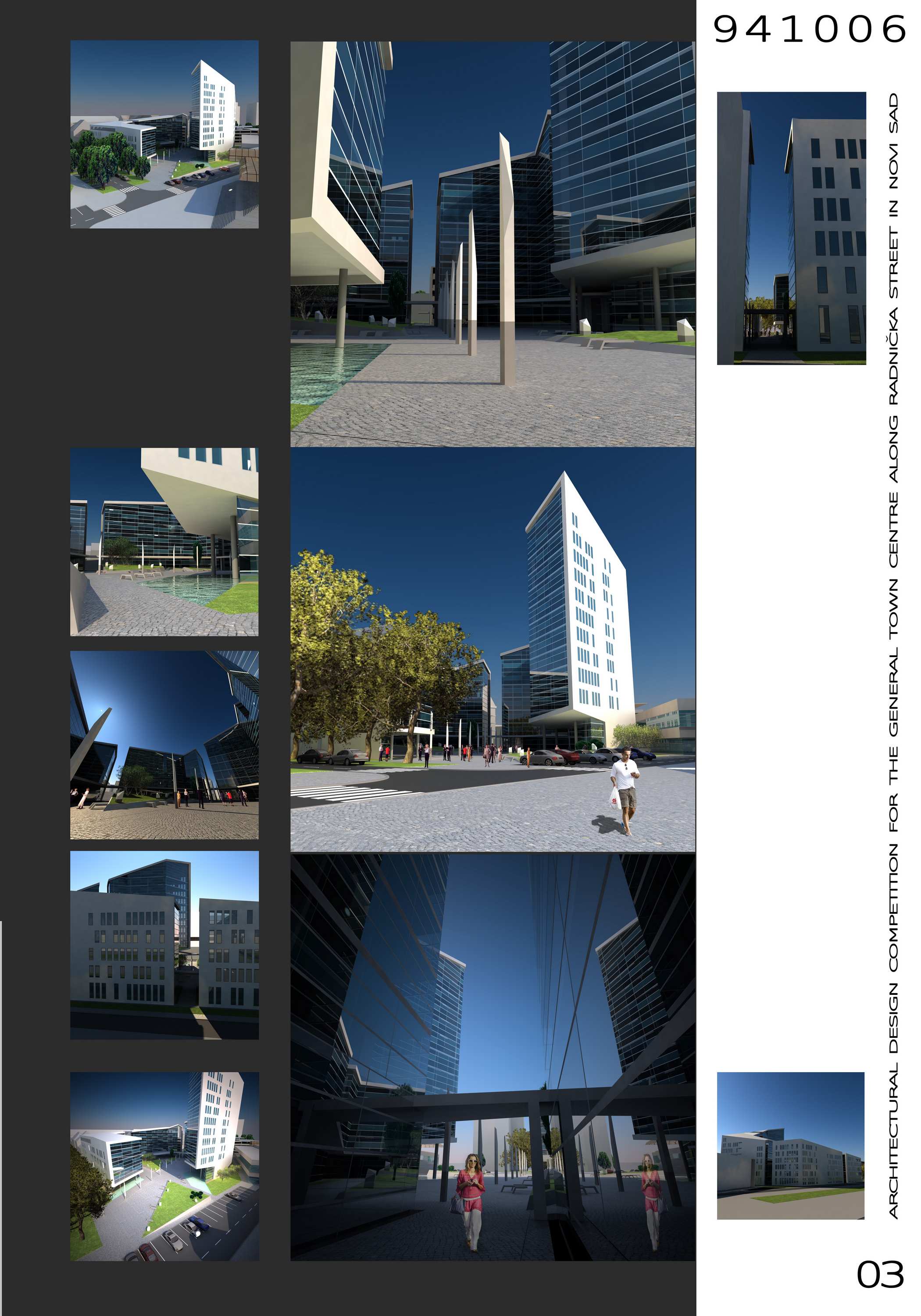
At the heart of the composition lies a new public forum—an open, landscaped plaza conceived as a democratic gathering space. The forum acts as a mediator between the institutions and the city, offering a civic foreground for public events, informal meetings, and everyday urban life. Carefully shaped building geometries frame this central space, guiding pedestrian movement and reinforcing spatial continuity.
Programmatic Organization
The complex accommodates a diverse set of institutions, including:
- City Authorities
- Provincial Authorities
- Magistrate Court
- Higher Magistrate Court
- Prosecution Service
- Public Car Park
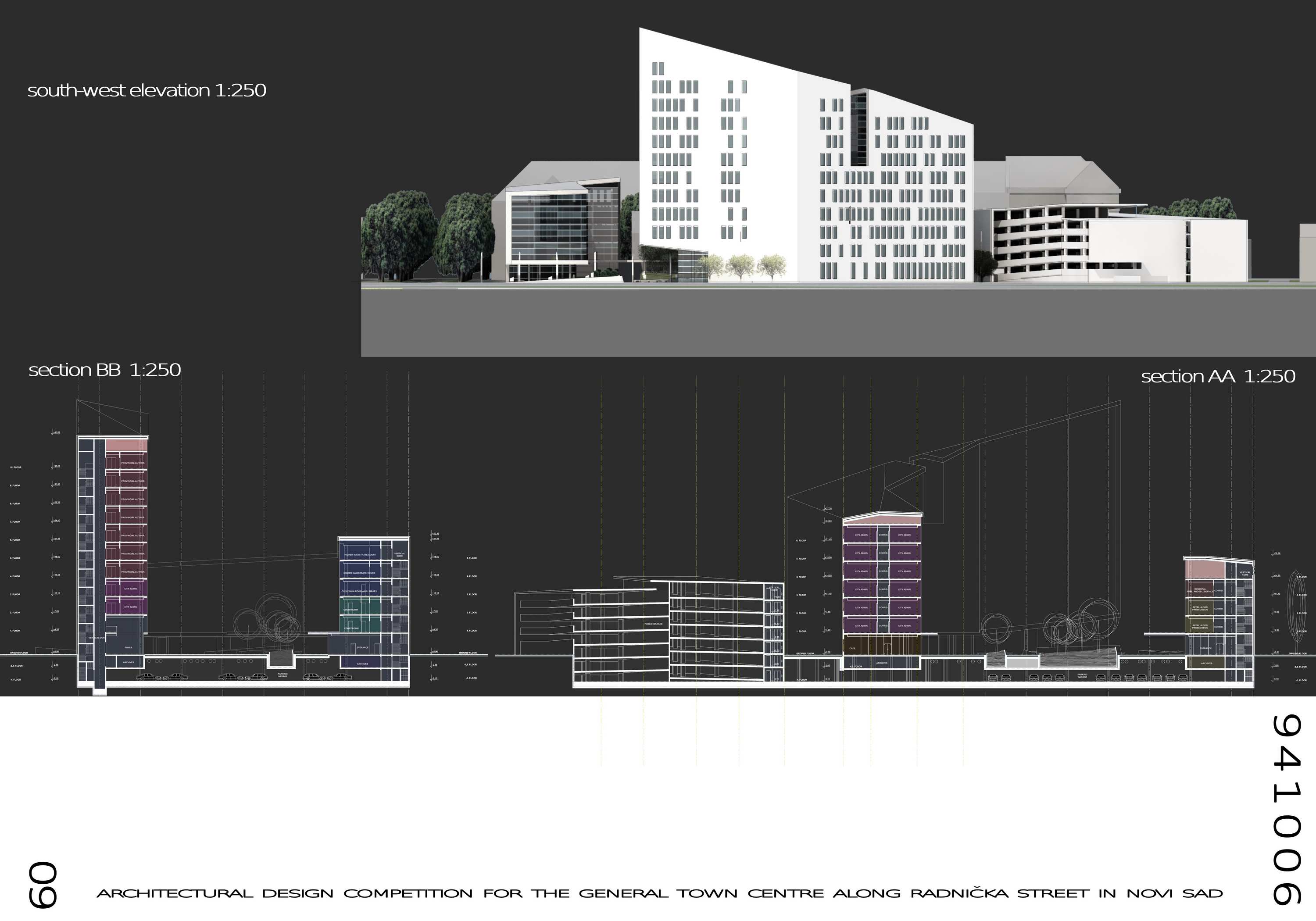
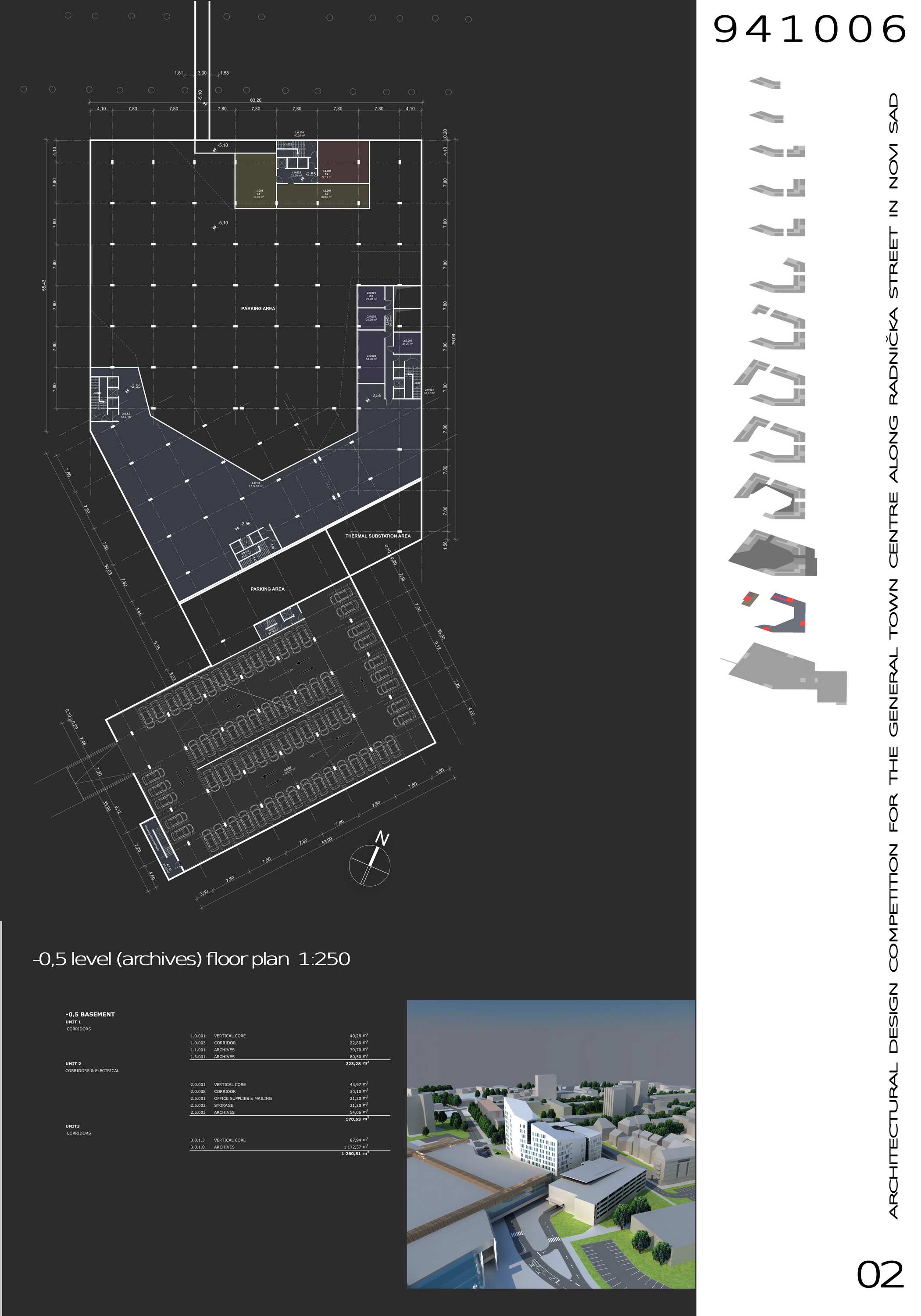
The buildings are organized according to functional clarity and security requirements, with separate circulation systems for public access, administration, and judicial operations. Lower levels and underground floors incorporate archival storage, technical areas, and structured parking, ensuring efficient service logistics while preserving the integrity of public space at ground level.
A dedicated public garage is positioned to optimize vehicular access without compromising the pedestrian character of the civic forum. Vertical cores and circulation spines provide legibility and intuitive orientation throughout the complex.
Architectural Expression
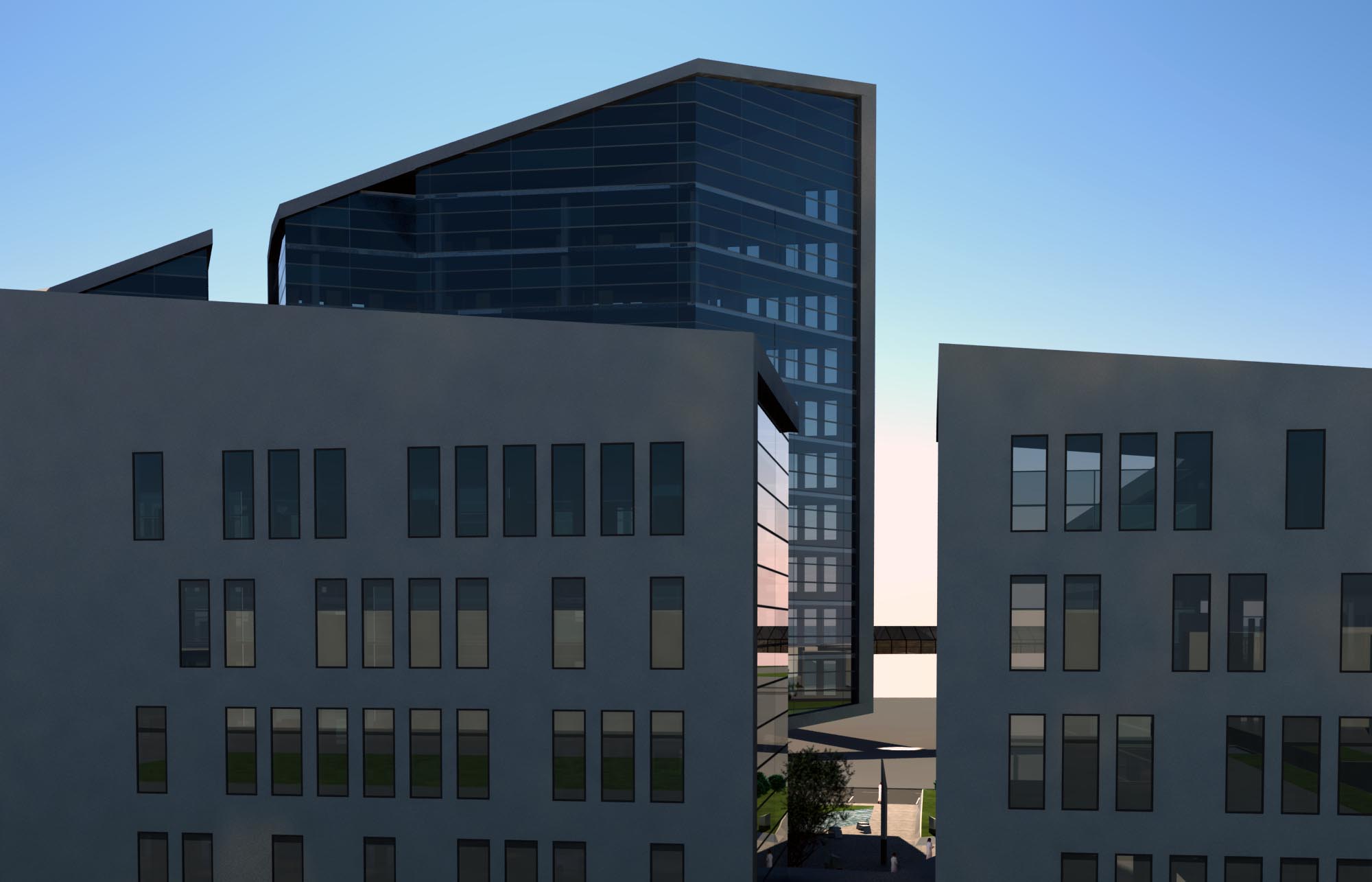
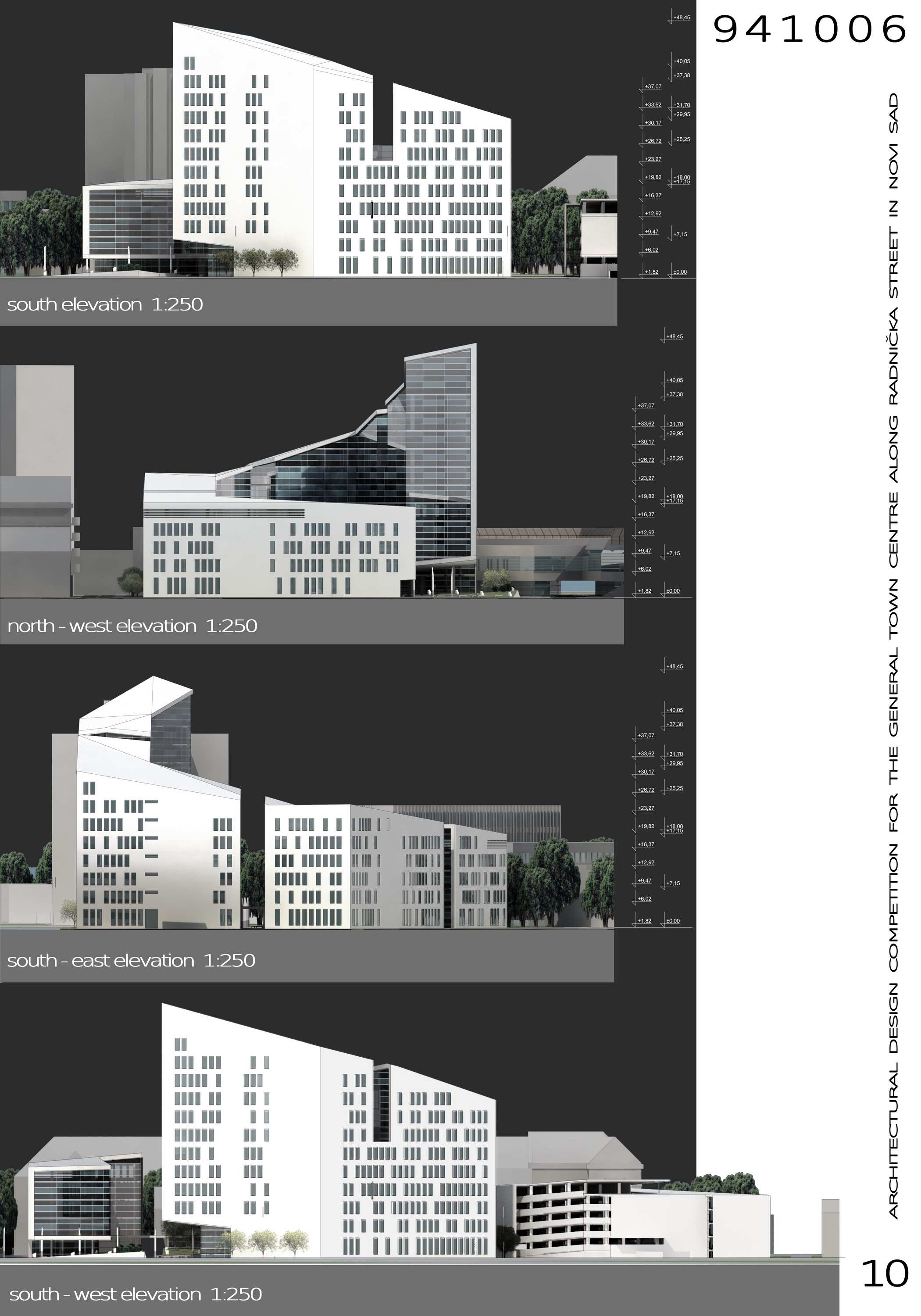
The architectural language is defined by a bold interplay of solid and transparent volumes. White, sculptural building masses contrast with glazed facades that open toward the plaza, symbolizing institutional transparency and accessibility.
A prominent tower element anchors the composition along Radnička Street, establishing a recognizable landmark within the evolving skyline. The angular geometry of the upper volumes responds to urban vistas and sightlines, reinforcing the project’s identity as a gateway to the administrative district.
Materially, the design balances permanence and openness—solid façades convey stability and authority, while expansive glazing expresses contemporary governance and civic engagement.
Urban Impact
The proposal aims not only to house institutions, but to create a new urban ambience—an environment where governance, justice, and public life intersect. Through the integration of landscape, water elements, pedestrian passages, and carefully scaled massing, the design fosters a human-centered civic environment.
By redefining the spatial structure of Radnička Street and introducing a cohesive administrative campus, the project contributes a forward-looking vision for Novi Sad’s institutional architecture—contemporary in form, yet deeply rooted in its urban context.


.jpg)
.jpg)
.jpg)
.jpg)
.jpg)
.jpg)
.jpg)
.jpg)


