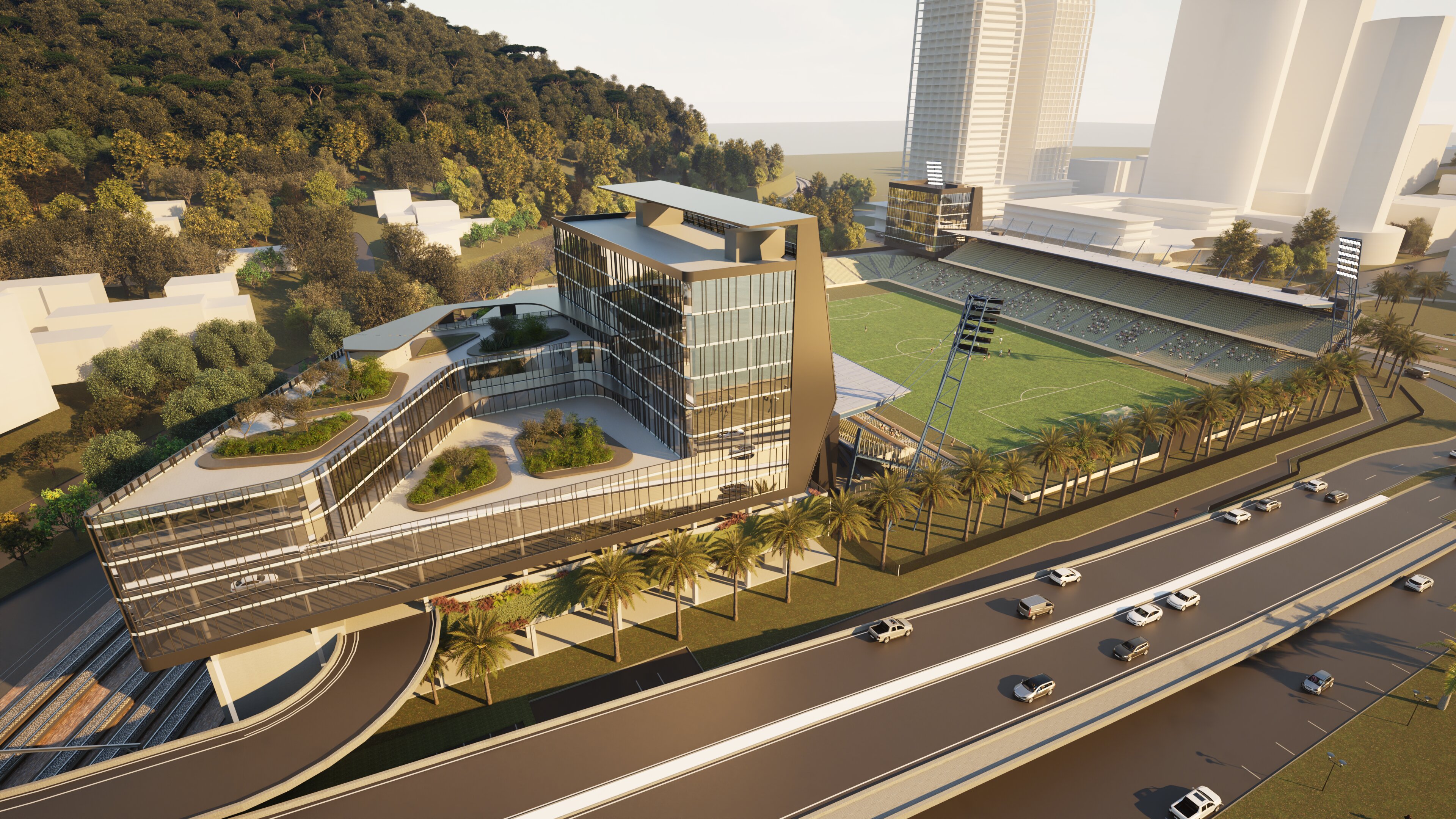
Background
The Fehér Street Football Stadium was conceived as a key component of Hungary’s official bid to host the 2006 UEFA European Football Championship, with Sándor Dúzs leading the design at ArkTOON / Schön Architects (predecessor of MSK Architects). Designed as a 30,000-seat venue meeting UEFA standards, the project represents an early exploration of integrated stadium architecture, urban infrastructure, and event-based masterplanning.
Masterplan
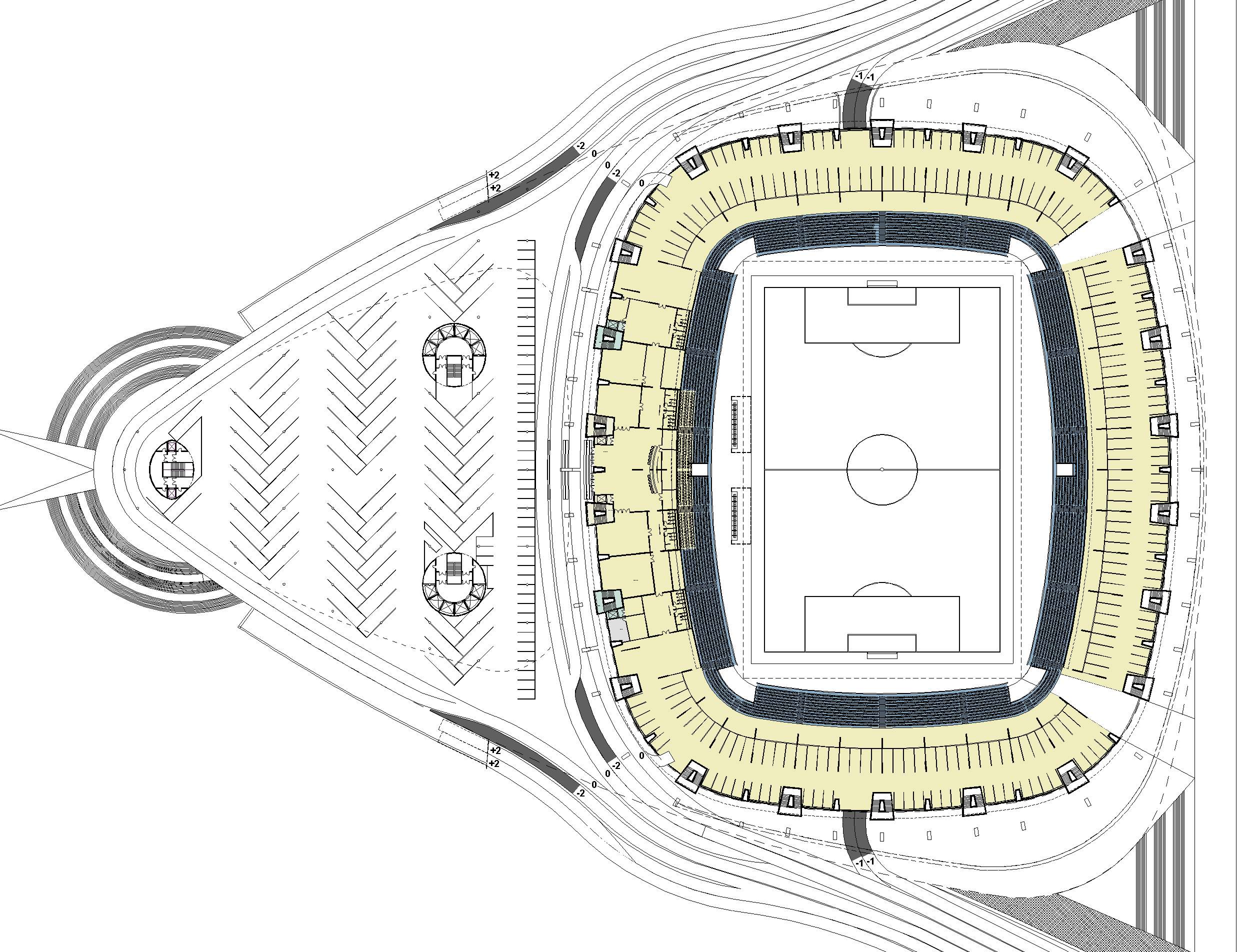
Strategically located in Budapest near major arterial routes and Ferihegy Airport, the stadium is embedded within a broader urban framework that prioritizes accessibility and large-scale crowd management. The masterplan organizes the site into distinct functional zones, including dedicated parking areas for opposing fan groups, VIP and prestige parking, and extensive auxiliary facilities such as catering, merchandise, and fan park areas. These external zones, totaling tens of thousands of square meters, extend the stadium experience beyond the building itself and enable efficient handling of peak event flows.
Arrangement
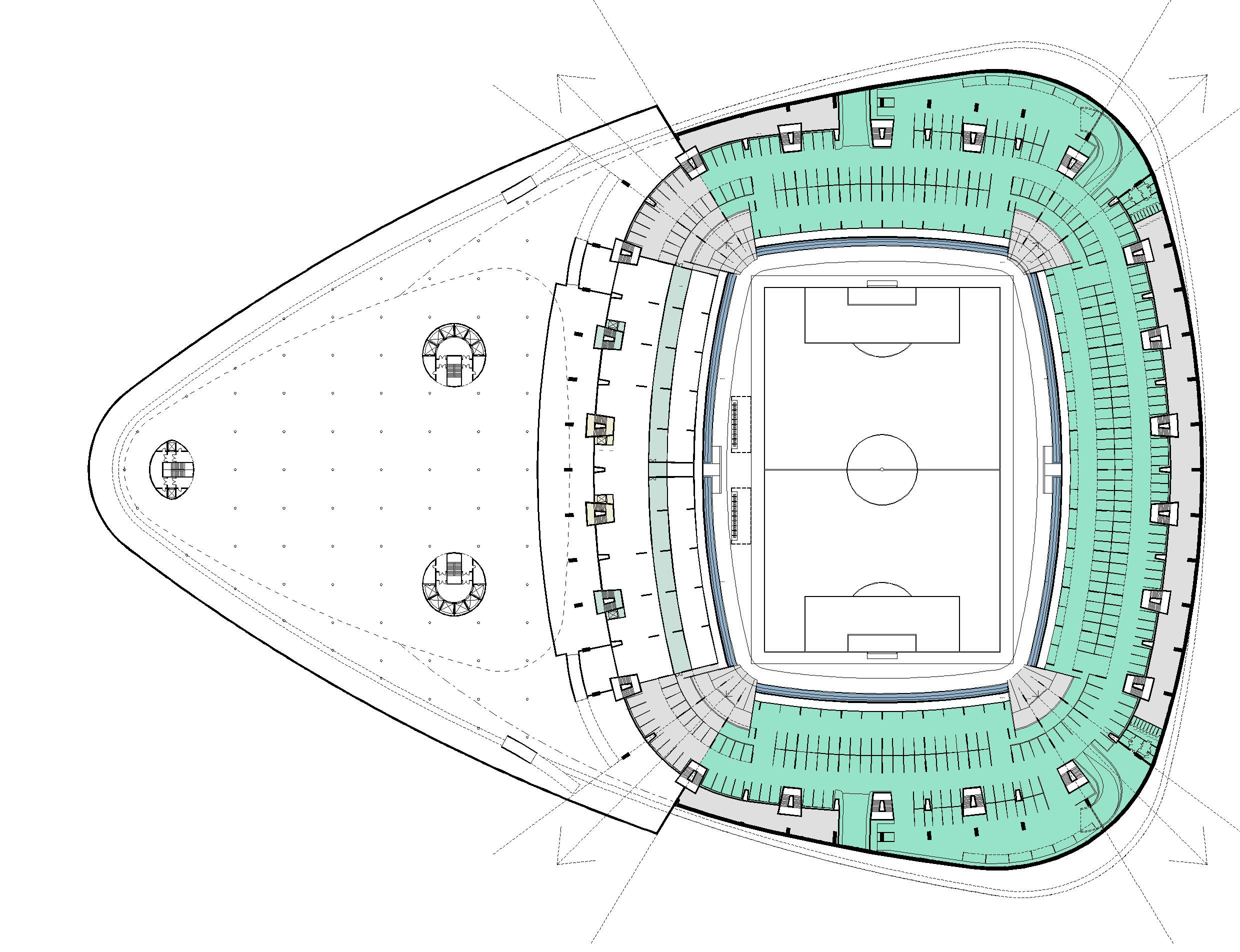
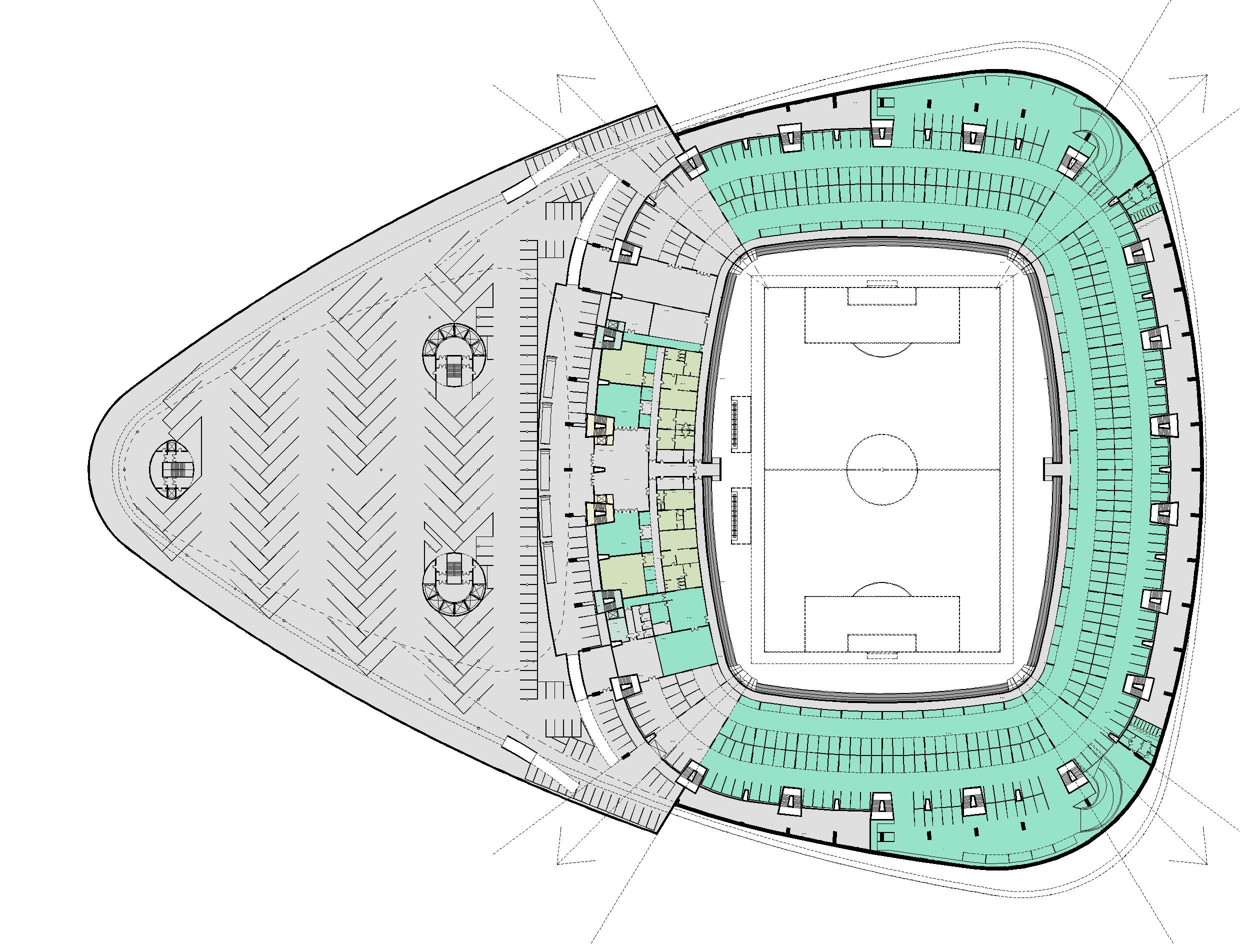
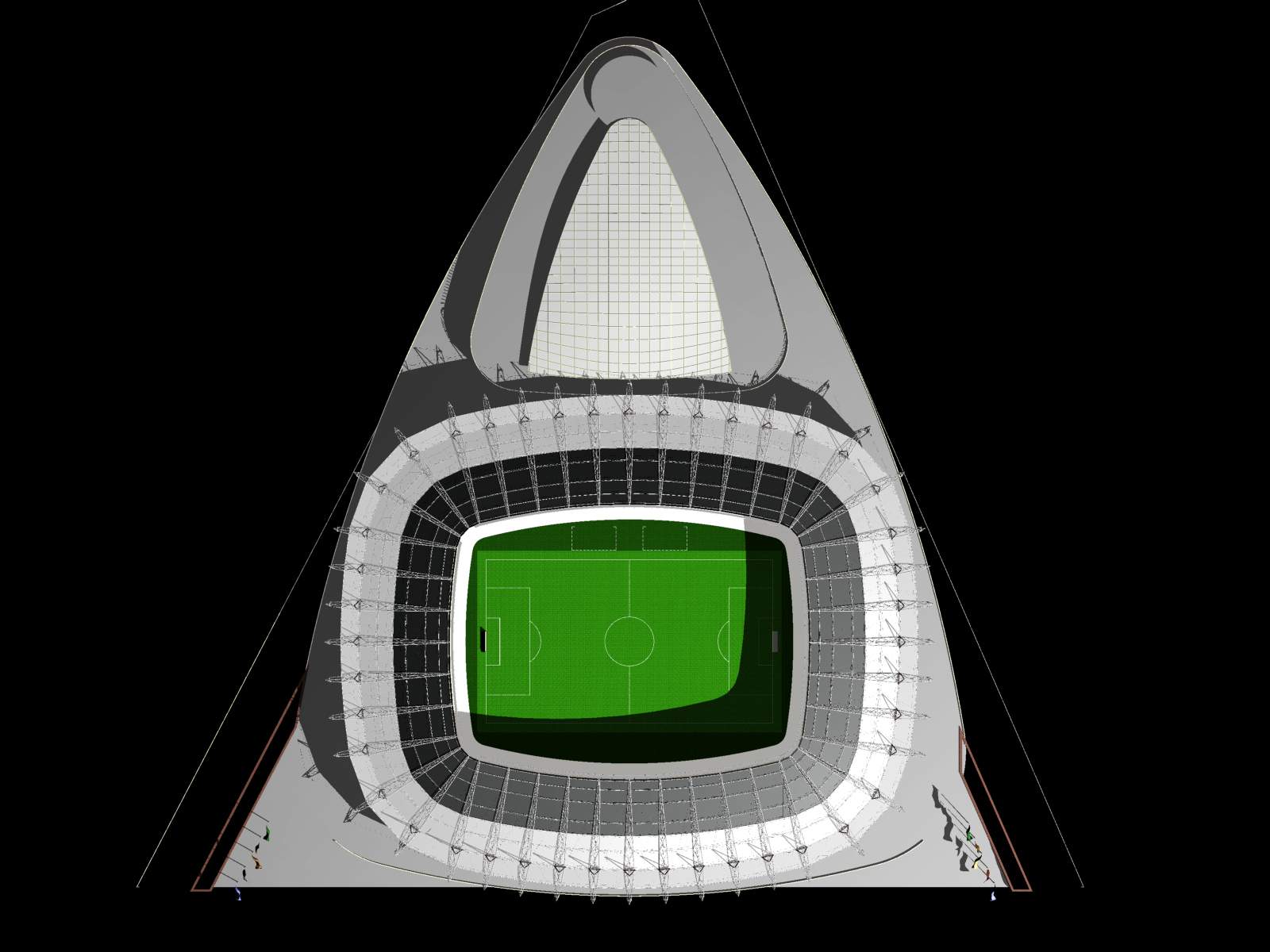
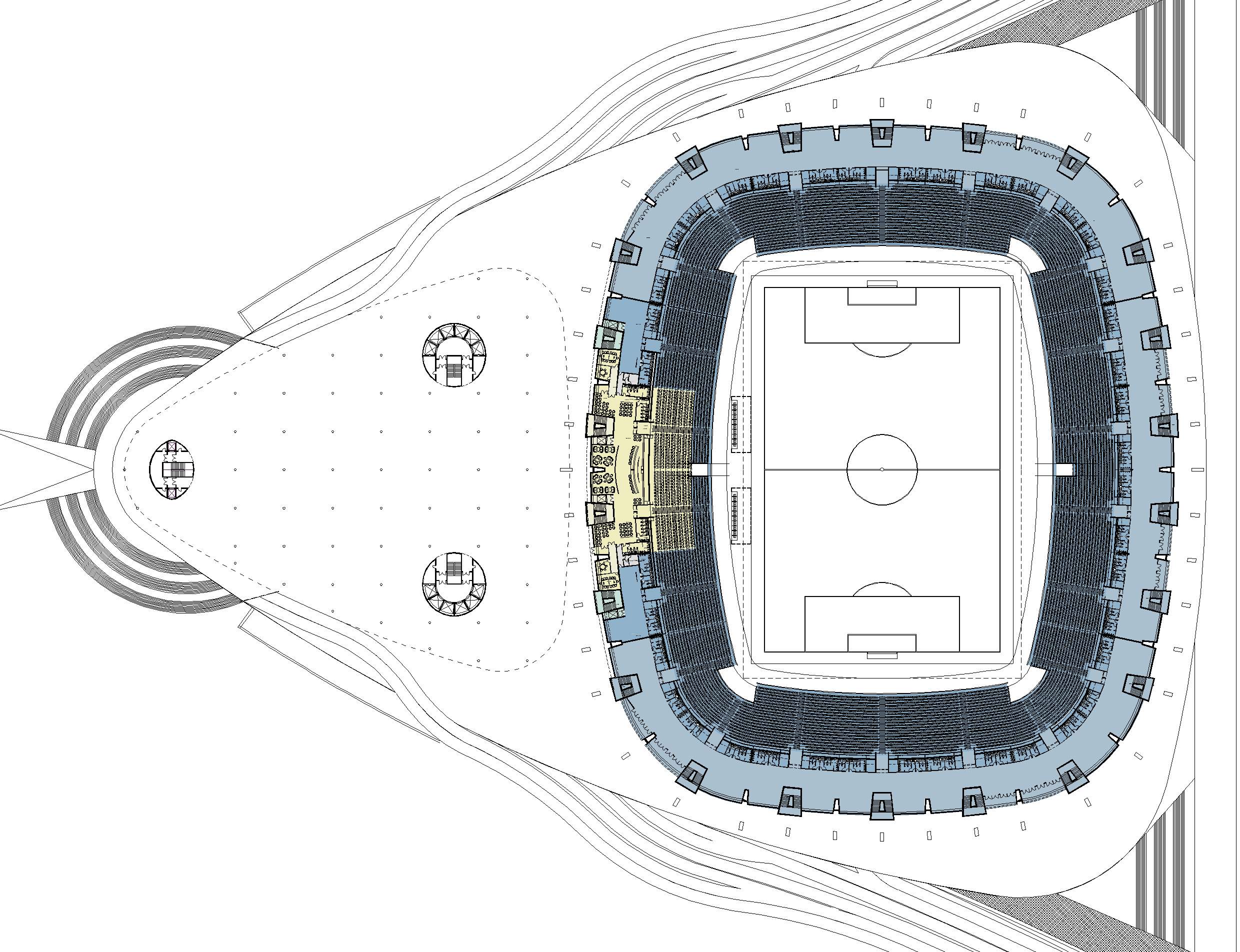
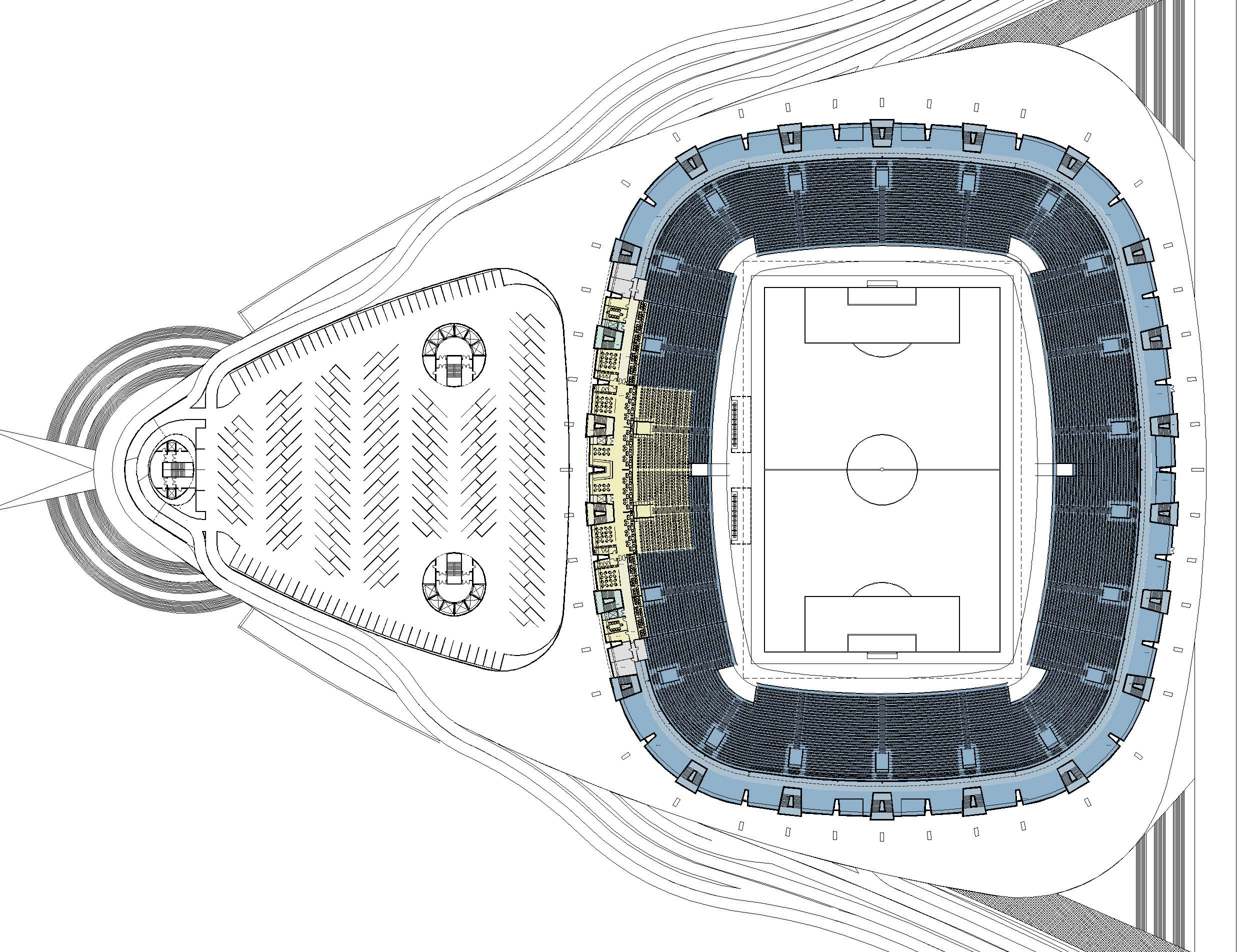
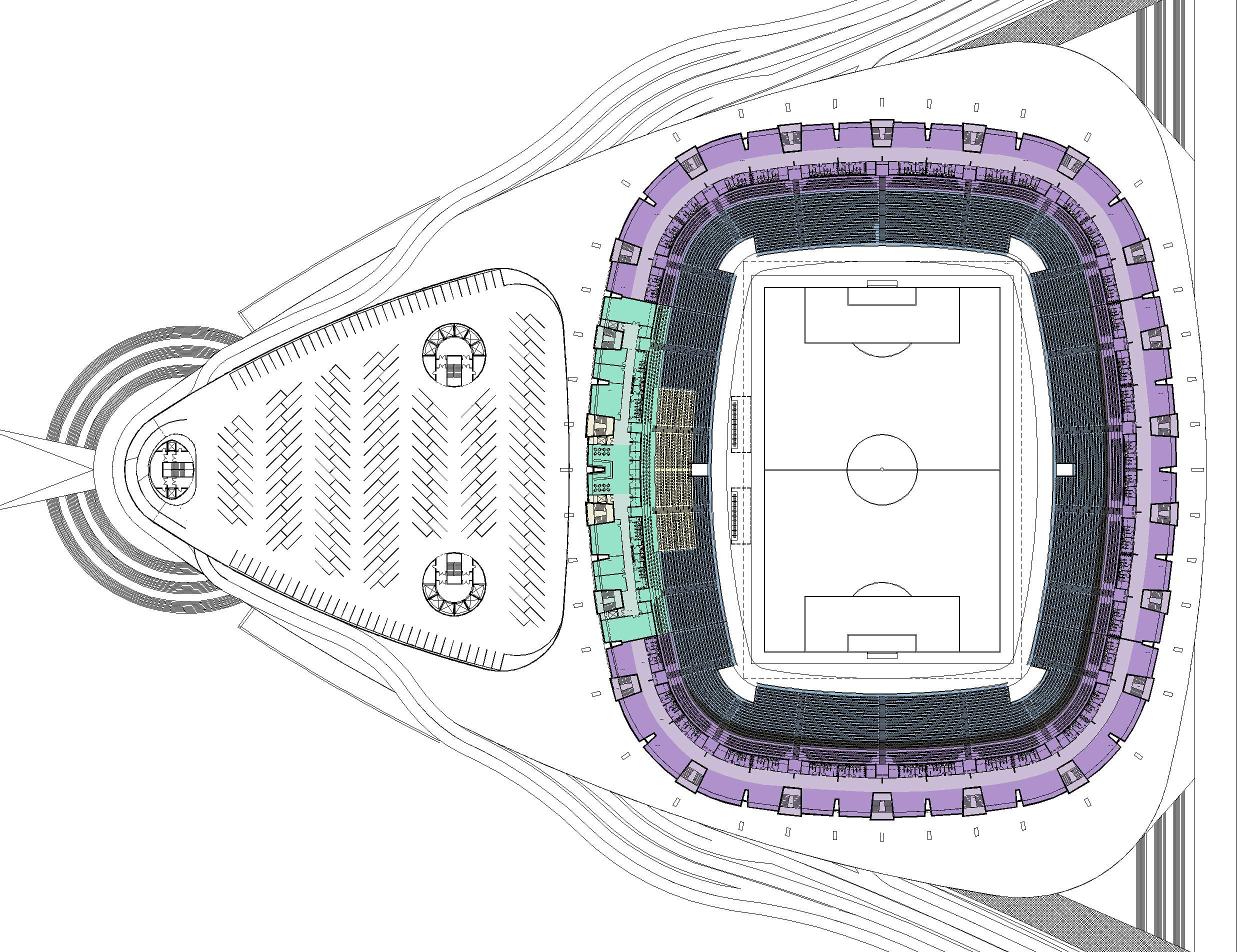
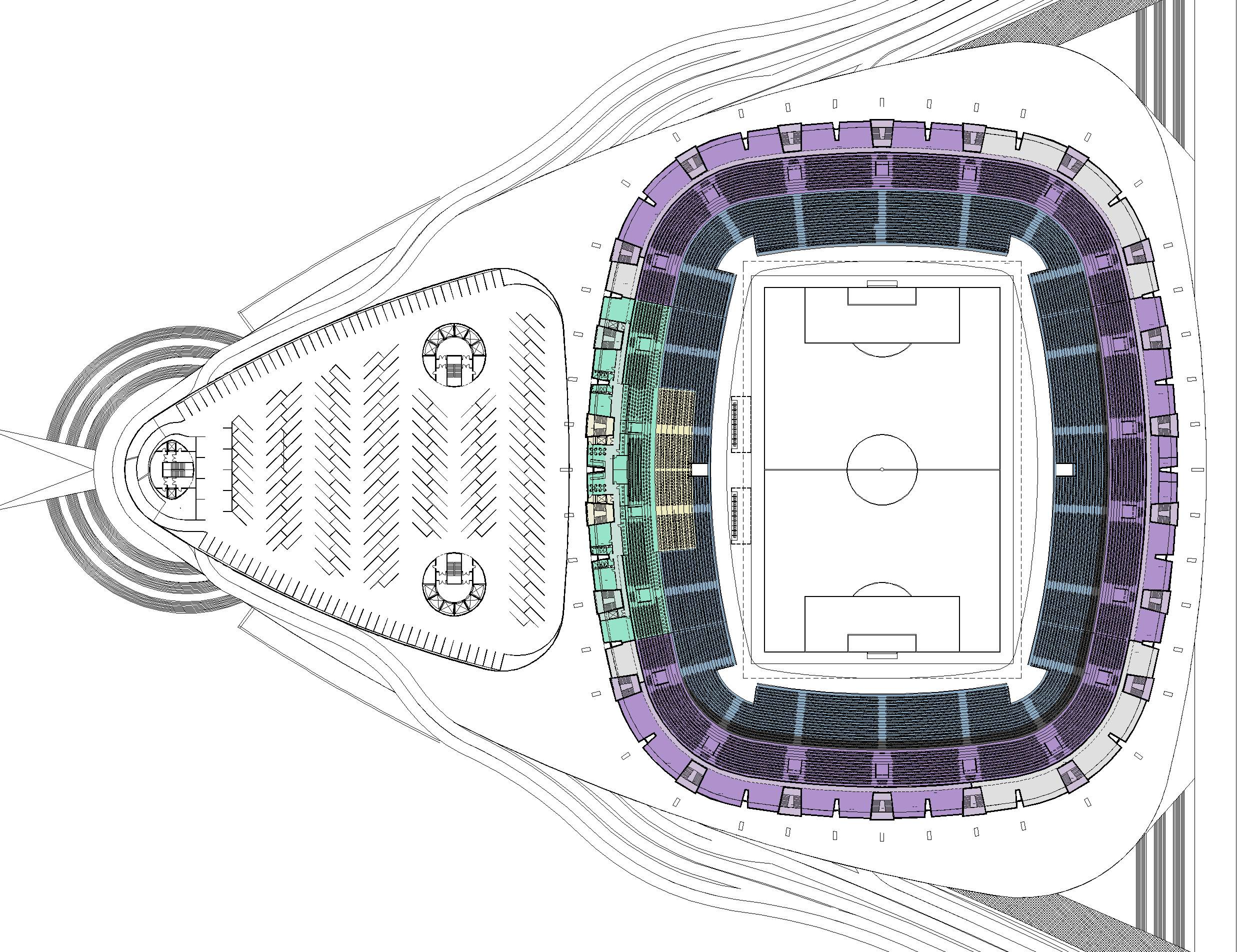
At the architectural level, the stadium is defined by a compact, continuous seating bowl that ensures optimal sightlines and proximity to the pitch. The sectional design reveals a carefully layered structure, accommodating multiple tiers of seating while maintaining clear circulation and service separation. The project incorporates a fully developed vertical zoning strategy:
- Lower levels (-2 and -1) are dedicated to players, referees, media operations, and service logistics.
- Ground and upper levels organize VIP and vVIP arrival, hospitality, and seating areas.
- Upper tiers house media facilities, including press boxes, studios, conference rooms, and broadcast infrastructure.
This stratification enables independent circulation routes for all user groups—spectators, athletes, officials, media, and service staff—ensuring compliance with international event standards and enhancing operational efficiency.
The stadium’s architectural identity is reinforced by a lightweight roof structure spanning the seating bowl, supported by a rhythm of external structural elements. A distinctive elongated forecourt canopy extends from the main volume, forming a multifunctional arrival space and visual landmark. This gesture not only enhances the stadium’s presence within the city but also provides sheltered public space for pre- and post-event activities.
Internally, the design integrates comprehensive support facilities, including team locker rooms, warm-up areas, medical and doping control rooms, media interview zones, and hospitality suites. The VIP and corporate areas are positioned to provide premium viewing conditions and direct access, reflecting the increasing importance of hospitality in stadium economics.
The Fehér Street Stadium concept demonstrates a holistic approach to stadium design—balancing architectural expression, structural clarity, and operational logic. The project highlights the practice’s long-standing expertise in complex sports venues, large-scale event planning, and integrated urban design.


.png)
.jpg)
.jpg)
.jpg)
.jpg)
.jpg)
.jpg)
.jpg)


.avif)