Purpose
Cafe Chain Bridge (currently RAQPART Bar) is a modular riverside restaurant situated along the Danube, adjacent to Budapest’s iconic Chain Bridge. The project responds directly to the site’s extreme environmental conditions: periodic flooding necessitates a building that is not only resilient, but fully demountable and capable of repeated reassembly without loss of performance or identity.
Modular System
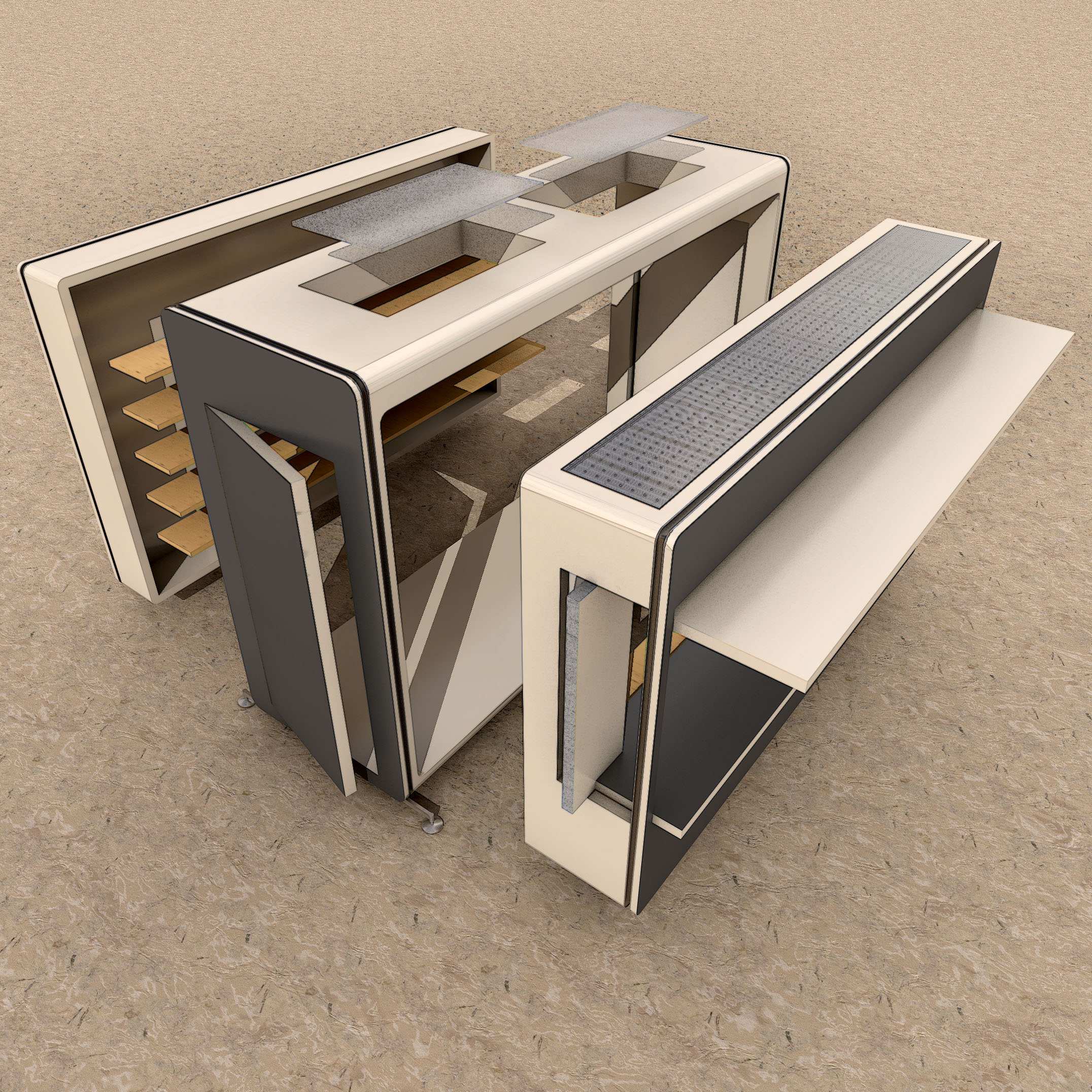
The architectural concept is based on a clear, rational system of prefabricated components. A galvanized steel frame forms the primary structure, supporting a lightweight roof composed of repetitive linear elements that provide both shading and a strong architectural rhythm. Beneath this canopy, the program is organized into three distinct yet interconnected zones: an open riverside terrace, a semi-covered dining platform, and a compact enclosed service core containing bar and kitchen functions. An upper-level deck extends the experience vertically, offering panoramic views of the Danube and the historic urban fabric.
Material selection emphasizes durability, transportability, and ease of assembly. Modular wall panels, timber decking, and standardized structural connections allow the building to be dismantled and reconstructed multiple times with efficiency. This adaptability has been proven in practice, as the structure has been relocated and rebuilt several times over the past 15 years in response to changing river conditions.
Simplicity
Visually, the architecture balances industrial precision with warmth. The exposed steel frame and ventillated stainless steel roofing convey lightness and durability, while timber surfaces and furniture create a welcoming atmosphere for social interaction. The open edges and minimal enclosure ensure continuous visual and physical connection to the riverfront, reinforcing the project’s role as an urban gathering space.
Cafe Chain Bridge (currently RAQPART Bar) demonstrates how architecture can address environmental constraints through intelligent modular design—transforming a temporary necessity into a defining architectural quality.